Are you experiencing pain that travels from your lower back down your buttock and leg? Do you feel tingling, numbness or a burning sensation when sitting, standing or walking?
These may be symptoms of sciatica, a condition involving pain associated with irritation of the nerve roots that contribute to the sciatic nerve.
Sciatica can interfere with everyday activities, including sitting at work, driving, sleeping and walking. Understanding the possible causes and getting an appropriate assessment can help you make informed decisions about treatment.
At iChiropractic in Kuala Lumpur, we provide chiropractic care and rehabilitation services to help suitable patients manage musculoskeletal pain and improve movement and function.
What Is Sciatica?
Sciatica describes pain that travels along the path of the sciatic nerve, which extends from the lower back through the buttock and down the leg.
It is important to understand that sciatica is a symptom, not a diagnosis of the underlying cause. The pain often develops when a nerve root in the lower spine becomes irritated or compressed.
Sciatica commonly affects one side of the body, although the symptoms and severity can vary between individuals.
What Are the Common Symptoms of Sciatica?
The symptoms of sciatica may include:
- Pain radiating down the leg: Sharp, shooting or burning pain extending from the lower back or buttock towards the thigh, calf or foot.
- Tingling sensations: A pins-and-needles feeling in the leg or foot.
- Numbness: Reduced sensation in certain areas of the leg.
- Muscle weakness: Difficulty lifting the foot or moving the leg normally in more significant cases.
- Pain aggravated by certain activities: Sitting, bending, coughing or sneezing may aggravate symptoms in some people.
Not everyone with sciatica experiences lower back pain. Some people notice that the leg pain is more troublesome than the back pain.
If you experience new or progressive muscle weakness, you should seek prompt medical assessment.
What Causes Sciatica?
Several conditions can irritate the nerve roots that contribute to the sciatic nerve.
1. Slipped Disc or Herniated Disc
A lumbar disc herniation occurs when material from an intervertebral disc extends beyond its normal boundary. If it irritates or compresses a nearby nerve root, it can cause pain radiating down the leg.
However, not every slipped disc causes sciatica, and not every case of sciatica is caused by a slipped disc.
2. Spinal Stenosis
Spinal stenosis refers to narrowing of the spaces available for the spinal nerves. Depending on the location and severity, this can contribute to leg pain, numbness or weakness.
3. Age-Related Changes in the Spine
Changes involving the intervertebral discs and joints may contribute to nerve irritation in some individuals. These changes are common with ageing but do not always cause symptoms.
4. Other Causes of Buttock and Leg Pain
Muscle and joint conditions can also produce pain that resembles sciatica. An appropriate clinical assessment helps determine whether the symptoms are consistent with nerve-related pain or another condition.
Can Sciatica Get Better Without Surgery?
Yes. Many people with sciatica improve over several weeks to a few months, although recovery varies according to the cause and severity.
Treatment does not always require surgery. Appropriate conservative management may include maintaining tolerable daily activity, individualised exercises and other treatments selected according to the patient’s clinical findings.
Some lumbar disc herniations also become smaller naturally over time. However, this does not happen in every case, and symptom improvement does not necessarily mean the disc has returned to its original structure.
What Treatments May Help Sciatica?
The most appropriate treatment depends on the underlying cause, symptom severity and neurological findings.
Chiropractic Assessment and Care
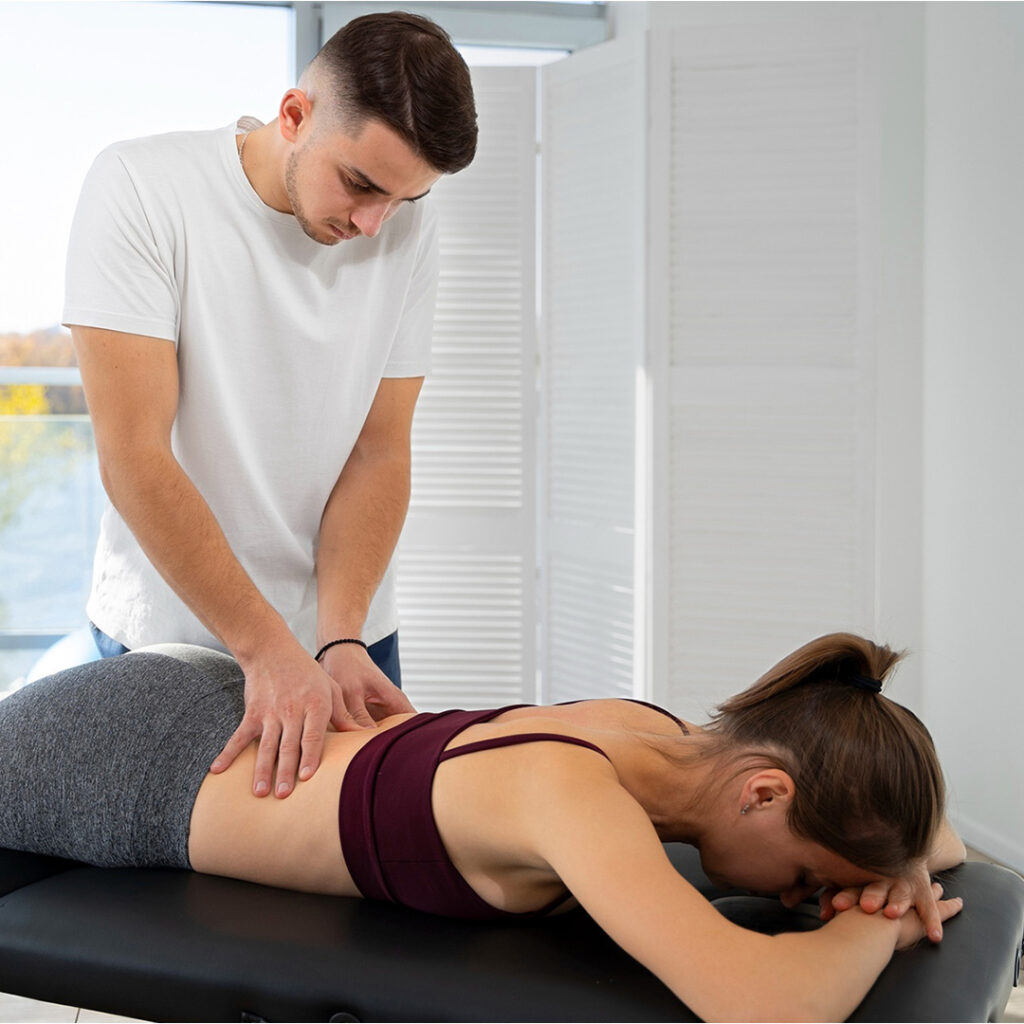
A chiropractor can assess relevant spinal and joint movement, review the patient’s medical history and screen for signs that require referral.
For selected patients, appropriate manual therapy may form part of a broader treatment plan. Treatment should be tailored to the individual’s condition, and spinal manipulation is not suitable for everyone.
Exercise and Rehabilitation
Individualised exercises may help improve mobility, strength and tolerance for everyday activities.
The type of exercise should depend on the patient’s symptoms and assessment findings. Movements that aggravate radiating pain or neurological symptoms should be reviewed rather than repeatedly forced.
Electrotherapy
Electrotherapy may be considered as an adjunct for symptom management in selected cases. Its suitability depends on the clinical assessment, and it should not be presented as a way to remove a disc herniation or directly decompress a nerve.
Shockwave Therapy
Shockwave therapy is used for selected musculoskeletal conditions, particularly certain tendon and soft-tissue disorders. It is not a standard treatment for nerve-root compression caused by a lumbar disc herniation. Whether it has a role depends on the actual source of the patient’s pain.
When Is Surgery Necessary?
Surgery may be considered when severe symptoms persist despite appropriate nonsurgical management or when there are significant neurological deficits. New bladder or bowel dysfunction, numbness around the genitals or anus, or rapidly worsening leg weakness requires emergency medical assessment.
When Should You See a Chiropractor for Sciatica in Kuala Lumpur?
Consider getting assessed if your leg pain persists, repeatedly returns, interferes with work or sleep, or is accompanied by tingling or numbness.
A proper assessment can help identify whether chiropractic care and rehabilitation are appropriate or whether further medical investigation or referral is needed.
At iChiropractic, our services include chiropractic care, electrotherapy and rehabilitation approaches selected according to the patient’s presentation and needs.
If you are looking for sciatica treatment in Kuala Lumpur, an assessment is a useful first step towards understanding the cause of your symptoms and the available management options.
Contact iChiropractic to enquire about an appointment.
This article is for educational purposes and does not replace an individual clinical assessment.